
Iron Deficiency
An iron deficiency can impair energy, cognition, immunity, sleep, and performance even before hemoglobin levels on a blood test begin to drop.
Iron plays a role in oxygen transport, energy/ATP production, DNA synthesis and cell growth, brain and nerve function, immune function, and muscle function. It is an important component in the production of certain proteins in the body. Vitamin C and copper are needed to shuttle iron into the cells.
Inflammation traps iron in the liver and in the cells creating a functional iron deficiency.
Common symptoms of iron deficiency include headaches and migraines, absent-mindedness, impaired memory, lowered cognitive function, fatigue, depression, sleep disturbances, and anxiety. Cardiorespiratory symptoms of iron deficiency include palpitations, exertional fatigue, and shortness of breath. Other symptoms include muscle and joint pain, weakness, restless legs, low exercise tolerance, hair loss, ice cravings, cold intolerance, and weight gain. Other clues that iron is deficient include chapped lips or cracked corners of the lips, cracks in the heels, sensitivity of the eyes to light, spooning of the nails, cold hands and feet, chronic neck pain, and thyroid issues (because iron is needed in the process of converting T4 to T3).
Myoglobin is the hemoglobin of the muscle which stores oxygen within the muscle so it is ready for exertion. If this is low, then a person has exercise intolerance and possibly the beginnings of chronic muscle pain due to low oxygen in the muscles.
A research study entitled Blood biomarker profiles and exceptional longevity found that "higher levels of total cholesterol and iron and lower levels of glucose, creatinine, uric acid, aspartate aminotransferase(AST), gamma-glutamyl transferase (GGT), alkaline phosphatase (AlkPhos), lactate dehydrogenase (LDH), and total iron-binding capacity (TIBC) were associated with reaching 100 years."
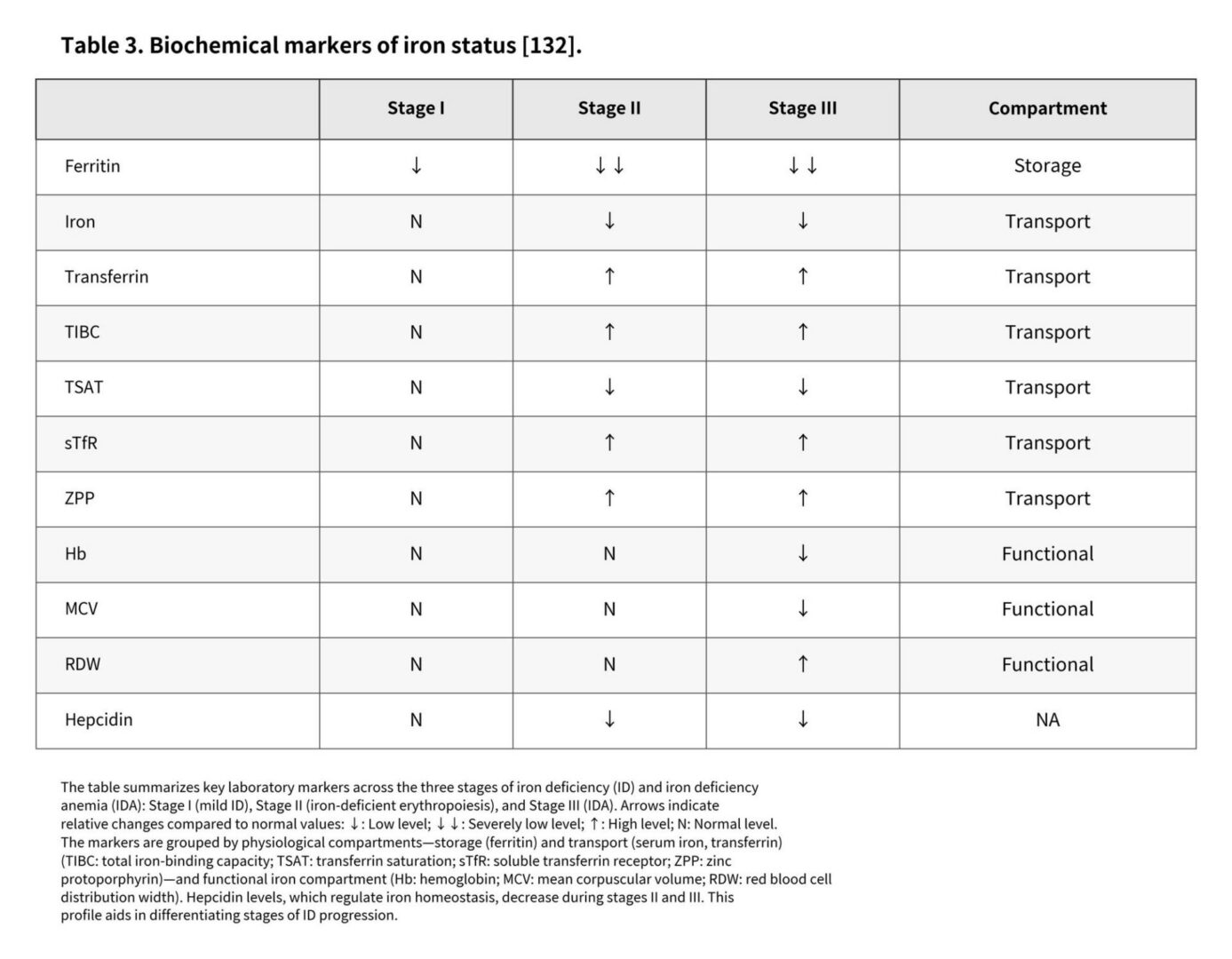
The following table defines the stages of iron deficiency. Note that the first indicator in stage 1, is low ferritin, which is rarely measured on a blood test, and which would warn a person that some of their symptoms may simply be addressed by iron supplementation. Note that low hemoglobin on a blood test does not show up until stage 3.
** Important Warning **
Nothing on this site is FDA approved. Nothing I write here is intended to be medical advice. Follow my recommendations at your own risk. Results may vary, and blah, blah, blah.